
Choosing Between Concrete Repair and Concrete Replacement

Concrete Repair and Concrete Replacement

When an industrial concrete floor begins showing signs of wear, one of the biggest decisions facility managers face is choosing between concrete repair and concrete replacement. While both solutions restore the functionality and safety of a warehouse floor, the right option depends on the severity of the damage, the underlying cause, your operational needs, and your long-term budget.
In many cases, repairing an existing concrete slab can extend its service life by many years. In other situations, replacing the slab entirely is the most practical and cost-effective long-term investment.
Understanding the advantages of both options helps you make an informed decision that minimizes downtime while maximizing the performance of your facility.
When Concrete Repair Is the Best Option
Concrete repair is often the preferred solution when damage is localized and the structural integrity of the slab remains intact.
Professional concrete repair can address:
Surface spalling
Concrete cracks
Joint deterioration
Minor settlement
Uneven slab transitions
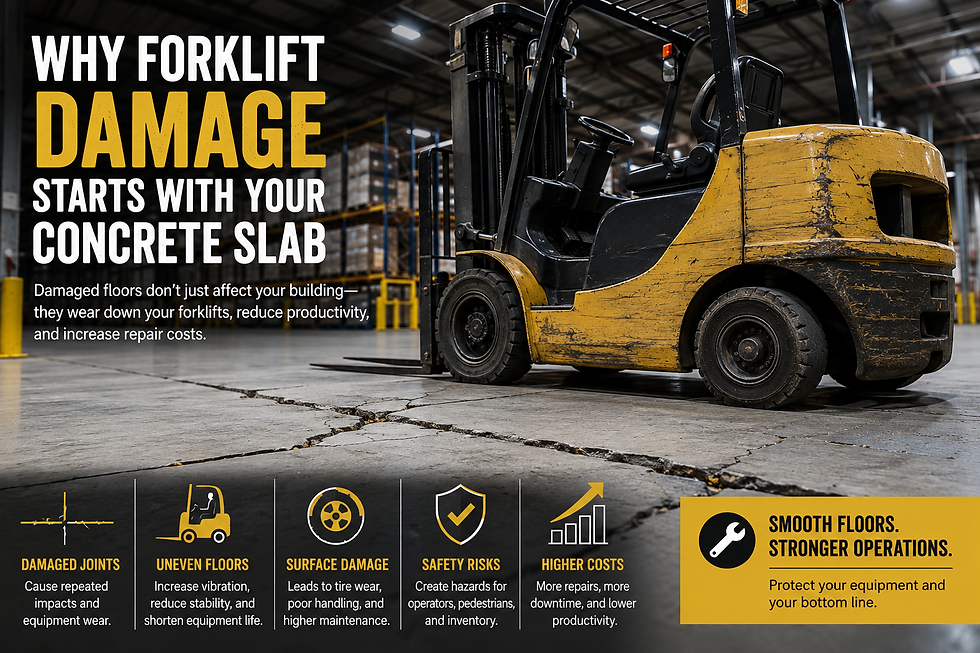
Surface wear caused by forklift traffic
Repairing damaged areas allows businesses to restore safety and functionality without the cost or disruption of replacing an entire concrete floor.
For warehouses operating around the clock, concrete repair often provides the fastest path back to normal operations.
Benefits of Concrete Repair
Choosing concrete repair offers several advantages:
Lower overall project cost
Less disruption to daily operations
Faster project completion
Extended service life of existing concrete
Improved warehouse safety
Reduced equipment wear
Better appearance and floor performance
When completed by experienced professionals, concrete repair can significantly improve the durability and reliability of an industrial floor.
When Concrete Replacement Makes More Sense
Although repair is often the most economical option, there are situations where concrete replacement becomes necessary.
Replacement may be recommended when a slab experiences:
Extensive structural cracking
Severe settlement
Widespread joint failure
Significant subgrade problems
Large sections of deteriorated concrete
Damage that cannot be economically repaired
Replacing a damaged slab provides an opportunity to correct underlying issues while installing a stronger foundation designed for current operational demands.
Benefits of Concrete Replacement
Concrete replacement offers several long-term advantages.
These include:
New, structurally sound concrete
Corrected subgrade deficiencies
Improved load capacity
Better floor flatness
Longer service life
Reduced long-term maintenance
Greater support for automation and heavy equipment
Although replacement requires a larger upfront investment, it can eliminate recurring repair expenses when damage has become too extensive.
Factors to Consider Before Deciding
Every warehouse operates differently, making every repair decision unique.
Before choosing between concrete repair and concrete replacement, consider:
Age of the Floor
Older slabs with repeated repair history may eventually reach the point where replacement provides greater long-term value.
Extent of Damage
Localized damage often responds well to repair, while widespread deterioration may indicate larger structural concerns.
Warehouse Operations
Facilities operating heavy forklifts, automated guided vehicles (AGVs), or high-capacity racking systems require concrete that meets demanding performance standards.
Downtime Requirements
Repair projects are typically completed more quickly than full replacement, making them attractive for facilities with limited shutdown windows.
Budget
While repair usually costs less initially, replacement may reduce long-term maintenance costs if the existing slab has reached the end of its service life.
Don't Ignore Early Warning Signs
Waiting too long to address concrete damage often increases repair costs.
Watch for signs including:
Expanding cracks
Chipped joints
Surface spalling
Uneven floors
Standing water
Excessive concrete dust
Forklift vibration
Frequent equipment maintenance
Addressing these issues early helps preserve the integrity of your warehouse floor while avoiding more extensive repairs later.
Professional Evaluation Makes the Difference
The best way to determine whether your facility needs concrete repair or concrete replacement is through a professional assessment.
An experienced concrete specialist can evaluate:
Structural condition
Floor flatness
Joint performance
Subgrade stability
Surface deterioration
Long-term repair potential
Rather than guessing, a professional evaluation ensures your investment addresses the root cause of the problem instead of simply treating the symptoms.
Trust GSA Slabs for Industrial Concrete Solutions
At GSA Slabs, we help warehouse owners, manufacturers, and distribution centers make informed decisions about their concrete floors. Whether your facility requires targeted concrete repair or complete concrete replacement, our experienced team delivers solutions designed to maximize durability, improve safety, and minimize operational downtime.
From crack repair and joint restoration to slab replacement and preventative maintenance, we provide industrial concrete services that keep your facility operating efficiently for years to come.
If your warehouse floor is showing signs of deterioration, contact GSA Slabs today to schedule a professional evaluation and discover whether concrete repair or concrete replacement is the right solution for your operation.


Comments