
Why Forklift Damage Starts with Your Concrete Slab
- seanpond1
- 5 days ago
- 4 min read

Forklifts are the backbone of warehouse operations. They move thousands of pounds of inventory every day, often traveling miles across the warehouse floor during a single shift. While many facility managers focus on maintaining their forklifts, one of the biggest contributors to equipment damage is often overlooked—the concrete slab beneath them.
Every crack, uneven joint, and deteriorating section of concrete places additional stress on your forklifts. Over time, that stress translates into higher maintenance costs, increased downtime, reduced productivity, and even safety concerns for operators.
If your forklifts seem to require frequent repairs, the problem may not be the equipment—it may be your warehouse floor.
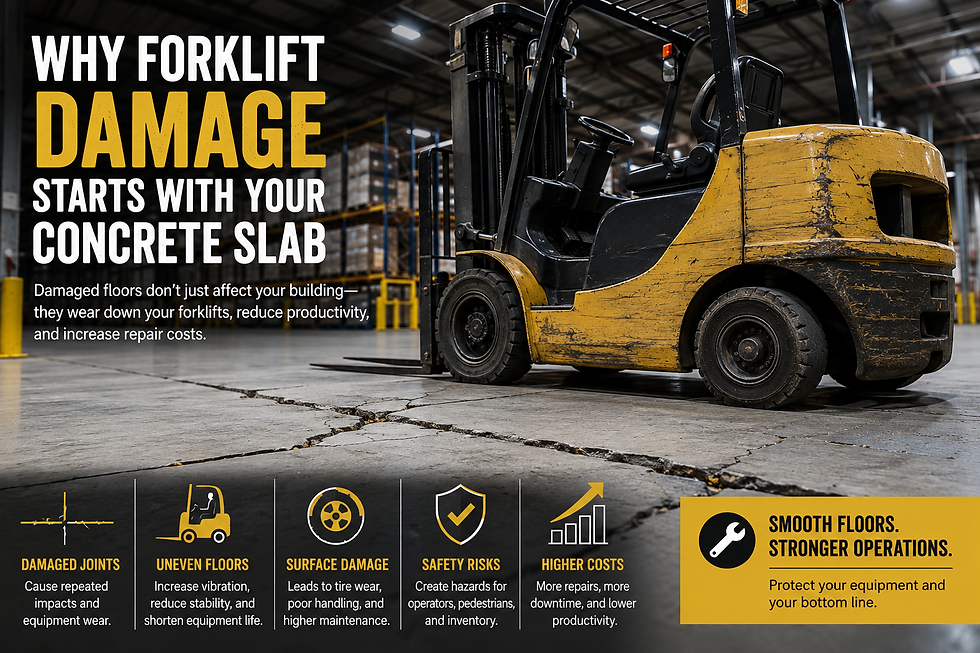
Your Concrete Floor Is Part of Your Equipment
Many people think of a warehouse floor as simply a surface to drive on. In reality, it's an active part of your material handling system.
Every time a forklift travels across damaged concrete, the floor transfers impact forces directly into:
Tires
Wheels
Bearings
Steering components
Mast assemblies
Hydraulic systems
Suspension components (where applicable)
Operator seating and controls
A smooth, well-maintained concrete floor allows forklifts to operate efficiently. A damaged floor forces every component of the machine to work harder than it was designed to.
Damaged Joints Create Thousands of Daily Impacts
Concrete joints are among the highest-stress areas in any warehouse.
When joint edges begin to chip, crack, or deteriorate, forklifts experience a sharp impact every time they cross.
While one impact may seem insignificant, consider the cumulative effect:
Hundreds of crossings each day
Multiple forklifts
Every shift
Every week
Every year
Those repeated impacts accelerate wear throughout the entire forklift.
Common results include:
Increased tire wear
Wheel damage
Loose steering components
Bearing failures
Premature maintenance
Reduced operator comfort
Repairing damaged joints is one of the most cost-effective ways to reduce unnecessary equipment wear.
Uneven Floors Reduce Productivity
Even small elevation changes can have a noticeable effect on warehouse operations.
Uneven concrete causes forklifts to:
Slow down
Bounce under load
Experience increased vibration
Transport pallets less smoothly
Require more careful maneuvering
For operators moving hundreds of pallets each shift, these small delays quickly add up.
A smoother floor allows forklifts to maintain consistent travel speeds while improving efficiency throughout the facility.
Forklift Vibration Costs More Than You Think
Excessive vibration affects far more than operator comfort.
Continuous vibration contributes to:
Fatigue
Reduced productivity
Equipment wear
Damaged electronic components
Loose fasteners
Increased maintenance expenses
Over time, vibration can shorten the service life of expensive warehouse equipment while increasing the frequency of repairs.
Concrete Damage Creates Safety Risks
Warehouse safety depends on predictable equipment performance.
Damaged concrete increases the risk of:
Dropped loads
Unstable pallets
Operator fatigue
Trip hazards for pedestrians
Unexpected steering movement
Reduced braking performance on uneven surfaces
Maintaining a smooth concrete floor helps create a safer environment for employees and protects valuable inventory from accidental damage.
Small Cracks Become Expensive Repairs
Many warehouse managers postpone repairing cracks because they appear minor.
However, cracks often allow:
Moisture infiltration
Debris accumulation
Joint deterioration
Surface spalling
Progressive slab movement
As damage spreads, repair costs increase.
Addressing small problems early is significantly less expensive than replacing large sections of deteriorated concrete.
Protect Your Investment in Warehouse Equipment
Forklifts represent a major capital investment.
Extending their lifespan begins with protecting the surface they operate on.
A professionally maintained warehouse floor can help reduce:
Tire replacement costs
Wheel failures
Suspension wear
Steering repairs
Hydraulic component stress
Maintenance downtime
Over the life of a fleet, these savings can be substantial.
Signs Your Floor May Be Damaging Your Forklifts
Your warehouse floor may require professional attention if operators report:
Excessive vibration
Rough rides
Forklifts bouncing over joints
Premature tire wear
Steering problems
Frequent wheel replacement
Cracked or broken concrete
Uneven travel paths
These symptoms often indicate that the floor—not the forklift—is the underlying issue.
Preventative Concrete Maintenance Saves Money
Many companies view concrete repair as an expense.
In reality, preventative maintenance is an investment that protects every piece of equipment operating on the warehouse floor.
Routine inspections and timely repairs help:
Extend forklift lifespan
Improve warehouse efficiency
Reduce maintenance costs
Minimize downtime
Increase employee safety
Preserve the value of the concrete slab
A proactive maintenance strategy often costs far less than repeated equipment repairs caused by deteriorating concrete.
Trust GSA Slabs to Keep Your Warehouse Moving
At GSA Slabs, we understand that your concrete floor is more than just a foundation—it's a critical part of your daily operation. Our team specializes in industrial concrete repair solutions that improve safety, reduce equipment wear, and support efficient warehouse performance.
Whether your facility needs crack repair, joint restoration, slab remediation, floor grinding, or preventative maintenance, we provide durable solutions designed to withstand the demands of heavy forklift traffic.
Don't wait until damaged concrete begins affecting your equipment and operations. Contact GSA Slabs today to schedule a professional warehouse floor evaluation and discover how proactive concrete maintenance can protect both your forklifts and your bottom line.
Frequently Asked Questions
Does a damaged concrete floor really affect forklift maintenance?
Yes. Cracked joints, uneven slabs, and deteriorated concrete create repeated impacts that increase wear on tires, wheels, bearings, steering components, and other critical forklift systems.
How often should warehouse floors be inspected?
High-traffic warehouses should perform visual inspections daily and schedule professional concrete evaluations at least once a year—or sooner if damage becomes noticeable.
Can repairing concrete improve warehouse productivity?
Absolutely. Smooth, level floors reduce vibration, allow forklifts to travel more efficiently, decrease operator fatigue, and minimize costly equipment downtime.
What is the biggest cause of forklift-related floor damage?
Heavy traffic over time naturally wears concrete, but neglected joints, expanding cracks, overloaded equipment, and poor preventative maintenance accelerate deterioration.
Is repairing concrete less expensive than replacing it?
In most cases, yes. Early repairs can extend the life of your warehouse floor for many years and help avoid the significant cost and disruption of full slab replacement.


Comments